
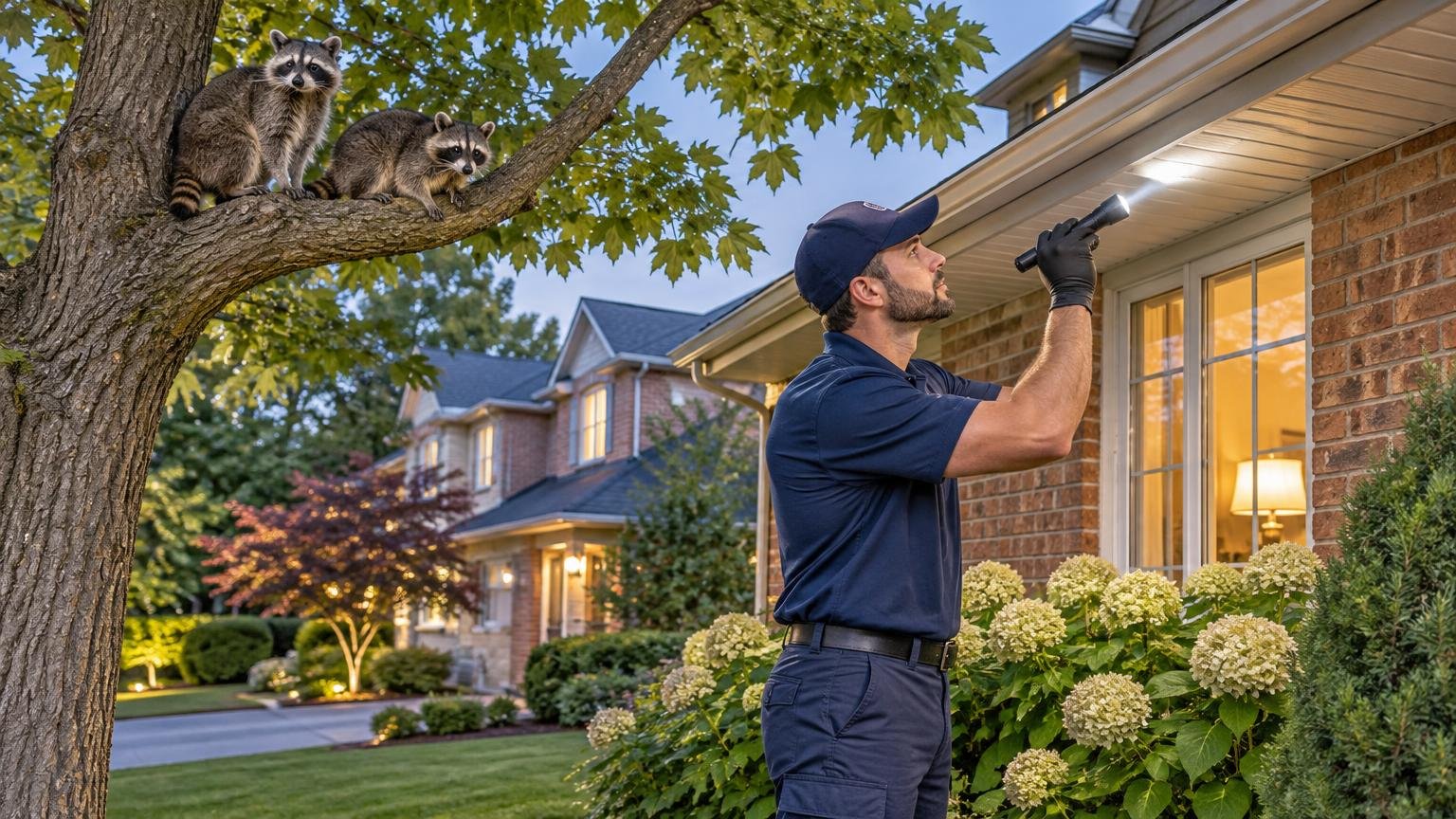
Raccoons can make night noises more noticeable when they check sheltered spaces through attic or chimney openings. Heavy footsteps, thumps or scratching overhead may mean a raccoon is checking out a sheltered space, not simply moving across the roof.
Raccoons are active after dark, and we often find that sounds near a bedroom ceiling, soffit or chimney need a closer look before anyone seals an opening. Acting too quickly can leave an animal trapped inside.
Could Raccoons Be Causing Your Night Noises?
A raccoon on the roof may make a short burst of noise and move on. Repeated sounds in the same spot, however, can point to an active entry point near the roofline, attic, soffit or chimney. Raccoons may check enclosed spaces that offer shelter.
What Should Homeowners Watch For?
- Signs: Heavy walking, scratching, chittering, thumps, disturbed soffits, loose roof vents and chimney activity
- Timing: Noises may be more noticeable at night when raccoons are active
- What We Do: We inspect the property, identify likely entry points, remove wildlife humanely and seal suitable openings once animals are out
If these signs are repeating, raccoon removal in Toronto should begin with an inspection, not an attempt to block the suspected hole.
What Do Raccoons Sound Like In An Attic At Night?
Raccoons often sound heavier than mice or squirrels. You may hear slow footsteps, rolling or dragging noises, firm thumps, scratching, or occasional chittering and vocal sounds. Still, one sound alone does not prove what animal is present. Its location, timing and frequency can help us narrow down the likely source.
Noise directly above a ceiling or near a chimney breast can suggest activity inside the structure rather than on the roof. A sound that happens night after night in the attic may also come with visible clues around the outside of the home.
We may look for signs such as:
- Disturbed or compressed attic insulation
- Staining near an opening or roof edge
- Damaged soffits or loose fascia
- Gaps around vents or roof intersections
- Evidence of activity near the roofline
Please do not enter a confined attic space or approach an animal you suspect is inside. A raccoon may feel cornered, and an attic can be difficult to move through safely. Repeated noises deserve attention because an animal that has found dependable access may return to the same place.
How Do Raccoons Get Into Attics And Chimneys?
Toronto and Vaughan homes can have weak spots where roof materials meet, shift or wear over time. We commonly inspect damaged soffits, loose fascia, roof vents, gaps at roof intersections and openings around older materials. Detached and semi-detached homes can both have access points that are hard to notice from the ground.
A chimney can also appeal to wildlife because it is tall, enclosed and sheltered. Sounds from inside a chimney may seem sharper or more echoing than attic noise. Scratching, movement or chittering near the fireplace area should not be ignored, but it also should not lead to attempts to smoke out, trap or block an animal.
Instead, we assess the full exterior of the property. The suspected opening matters, but nearby gaps can become the next access point if they are not addressed. A proper inspection helps us determine where activity is happening and which areas need attention once the animal is safely out.
How Does Humane Raccoon Removal In Toronto Work?
Humane removal starts with finding out what is actually using the space. We inspect the reported noise area, the exterior roofline and likely entry points to confirm the animal and plan the safest next step. That plan also needs to consider whether raccoons are actively using the area and whether dependent young may be present.
Closing a hole immediately is not humane exclusion. If a raccoon is still inside, sealing the opening can create a more difficult problem for both the animal and the property. Our approach is to allow for safe removal or exit first, then seal suitable entry points once we know the space is clear.
Effective raccoon removal in Toronto focuses on humane handling, identifying the access route and reducing the chance of repeat entry through proper exclusion work. Moving an animal without addressing the entry point does not resolve the conditions that allowed it inside.
How Can Vaughan Homeowners Keep Raccoons Out?
After wildlife activity has been addressed, the roofline still needs ongoing attention. We recommend watching for damaged soffits, loose vents, gaps near roof intersections and chimney caps that no longer sit securely. Repairs should deal with the entry route, not only the spot where you heard noise.
Property habits can also make a difference without placing blame on anyone. Secure garbage and green-bin contents, avoid leaving pet food outdoors, and keep outdoor storage areas from becoming easy shelter close to the house. These steps can reduce opportunities for raccoons to linger near the building.
Repeated attic noise, chimney sounds, visible roofline damage or uncertainty about an animal inside all warrant an inspection. For Toronto households, raccoon removal in Toronto should focus on confirming the problem before any repair work begins.
Why Should You Arrange an Inspection Before Sealing an Entry Point?
Night noises in an attic or chimney may signal raccoon activity, especially when the sounds repeat in one location. Sealing an opening too soon can trap an animal inside or leave young separated from their mother. The practical first step is to identify the animal, locate the access point and determine the right humane exclusion process before repairs are completed.
Get a Clear Plan for Raccoon Removal
GO! Pest Control can assess the situation and provide raccoon removal in Toronto that considers the animal, entry point and condition of the property. Our team uses humane exclusion methods and can advise on repairs once the area is ready to be secured. If you are hearing recurring noises or have found signs of activity, contact us to arrange an inspection.