GO! Pest Control logo
  • HOME
  • SERVICES
    • RESIDENTIAL PEST CONTROL
    • COMMERCIAL PEST CONTROL
    • PEST & WILDLIFE CONTROL
    • INSECT EXTERMINATION
    • BIRD CONTROL
    • ODOUR CONTROL SERVICES
  • AREAS WE SERVE
    • TORONTO (GTA)
    • OTTAWA (NCR)
    • HAMILTON
  • PEST ARCHIVE
    • ANTS
    • BED BUGS
    • COCROACHES
    • RODENTS
    • WILDLIFE
    • MORE PEST
  • Contact us
CALL NOW
866-467-3789
GET A FREE
ESTIMATE
CALL US NOW

Pavement ant

Pest profile

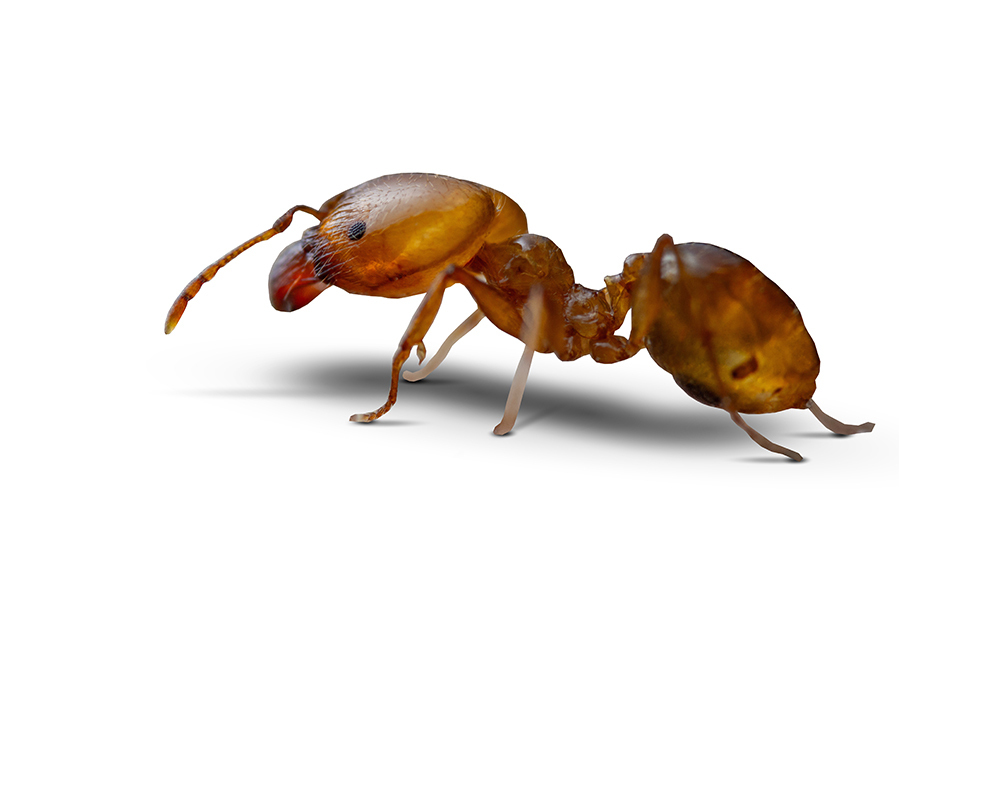
A pavement ant photographed close up, used on the GO! Pest Control pest library page
Pavement ant
Size: Length: 3-4 mm
Colour: brown to black
Description: Pavement ants are a common type of ant that can be found in many parts of North America. They are small, ranging from 2.5 to 3.2 mm in length, and are known for their dark brown to black coloration. As their name suggests, pavement ants often nest in cracks and crevices in pavement, including sidewalks, driveways, and parking lots.

Pavement Ants

What pavement ants look like

Pavement ants are small, roughly 3 to 4 mm long, and brown to nearly black with paler legs and antennae. Under magnification the head and thorax carry fine parallel grooves running front to back, and there are two small spines on the back of the thorax, which separates them from most other ants of similar size. The waist has two nodes. Workers are all one size, unlike carpenter ants, and they move in slow, deliberate lines rather than darting. Winged reproductives are considerably larger and often appear indoors in spring, which alarms people who assume they are termites. They are not. Pavement ants are one of the most common ants on Ontario properties and are easy to overlook until a trail forms.

Signs you have pavement ants

  • Soil craters. Small volcano shaped mounds of fine excavated grit pushed up through cracks in driveways, walkways, patio joints and garage floors.
  • Foraging lines. Persistent narrow trails along expansion joints, baseboards, foundation edges and the underside of counters.
  • Kitchen activity. Ants working crumbs, pet bowls, grease around the stove and sweet spills, often coming from a single entry point.
  • Pavement battles. Large numbers of ants massed in a shifting cluster on a driveway or path in spring, where two neighbouring colonies are fighting.
  • Grit indoors. Fine sand or soil appearing repeatedly along a basement wall, under a slab edge or at the base of a door frame.
  • Spring swarmers. Winged ants at basement windows and light fittings on warm days, which means a mature colony is nesting close by or under the slab.

Cratered joints outside plus an indoor trail usually means the nest is under the concrete.

Why pavement ants turn up around Ottawa and Toronto properties

Pavement ants are named for where they live. They nest in soil under hard surfaces, and our cities are covered in them: driveways, sidewalks, interlock patios, garage slabs, basement floors, porch pads, curbs and the gravel base under walkways. Concrete holds heat, sheds rain away from the nest and gives the colony a hard ceiling that nothing can dig through, which is close to ideal. Ontario freeze and thaw cycles crack and lift slabs every winter, opening fresh routes each spring, and settled interlock joints do the same. Once a colony is established outdoors, foraging workers follow warmth and food into the building through slab cracks, sill gaps, utility penetrations and door thresholds. Kitchens, pantries and pet feeding areas give them grease, sugar and protein, and a basement slab crack lets them work indoors through the winter.

Are pavement ants dangerous?

Honestly, pavement ants are a nuisance rather than a hazard. They can sting, but the sting is weak and they almost never do it, and they are not aggressive toward people or pets. They do not transmit disease in any meaningful way. The practical concern is contamination rather than infection: ants crossing bins, drains and outdoor surfaces before walking over food, counters or pet bowls is unhygienic, and an ant trail through a pantry can ruin opened packaging. The property risk is also modest. They do not damage wood or wiring. Over time, persistent excavation under interlock, patio stones and walkway edges can undermine sand bedding and cause pavers to settle unevenly, and the soil pushed up through joints is untidy, but nothing structural is at stake. Large indoor numbers are the main reason people call.

How to keep pavement ants away

  • Seal cracks in driveways, walkways, garage slabs and basement floors, and repoint or re-sand settled interlock joints.
  • Close gaps where utilities, pipes and cables pass through the foundation, and fit or replace worn door thresholds and sweeps.
  • Keep food in sealed containers, wipe up grease and sugar promptly and clean under appliances where crumbs collect.
  • Lift pet bowls between meals, and keep pet food in a closed container rather than an open bag.
  • Rinse recycling, keep bin lids closed and move bins off the slab beside the house where possible.
  • Keep a clear strip of gravel or bare soil against the foundation instead of mulch, and move stacked stone and lumber away from the wall.

Sealing entry cracks and removing food sources solves most pavement ant complaints.

How GO! Pest Control handles pavement ants

  • Inspection. We follow the trails back to their entry points, check the slab and joint cracks outside and locate the nests under the hard surfaces.
  • Treatment. We use baits that workers carry back to the colony, combined with a targeted perimeter application where it will do the most good, rather than surface spraying trails.
  • Exclusion. We identify the cracks, thresholds, weep holes and utility penetrations that let ants in, and close what can be closed on site.
  • Follow-up. We come back to confirm the colony has collapsed and re-bait where trails reappear, since nests under slabs can take more than one visit.
  • Advice. We go through the food storage, cleaning and outdoor habits that are keeping the trail supplied.

We are licensed, insured and bonded, and we work in homes, apartments, condos and businesses across the Toronto GTA, Ottawa and Hamilton.

Common questions about pavement ants

Do pavement ants bite or sting?

They have a sting but it is weak and very rarely used on people. They are not aggressive and they are not a threat to children or pets. The complaint is almost always the numbers, not the risk.

Why are there piles of sand on my driveway?

That is excavated soil. The colony nests in the base beneath the concrete or interlock and pushes the spoil up through the nearest crack or joint. Fresh piles after rain mean the nest is active.

Why does spraying the trail not work?

Killing the visible workers leaves the queen and brood untouched under the slab, so the trail rebuilds in days. Baiting works because the workers carry the material back to the colony.

They swarm on my driveway in spring. What is happening?

You are probably watching two colonies fighting over territory, which is normal behaviour in spring. If the ants have wings instead, they are reproductives leaving a mature nest.

Can they damage my house?

Not structurally. They do not tunnel into wood or chew wiring. Over several seasons the digging can undermine sand bedding under pavers and cause stones to settle, which is a maintenance issue rather than a structural one.

Types of Ants

Click the ant type to learn what to look for and why the right treatment plan matters.
Carpenter ant
Pavement ant
Pharaoh ant

Related Pests

Other pests we deal with that often turn up in the same places.

Types of Pavement ant

Subject: Pavement ant

SEND A QUICK MESSAGE

ROUND-UP YOUR Pavement ant PROBLEM.

We’re Standing-by to Help
18000
Satisfied clients
12
Awards in 2018, 2019, 2020
50
Years of combined experience
1000000+
Pests exterminated or relocated
AWARD-WINNING SUPPORT
Need Assistance?

Our friendly and knowledgeable team will be happy to help! Contact us to speak to a representative.

SECURED PAYMENT
Safe & easy

Every transaction is completely secure. We take your privacy seriously.

QUICK TURN-AROUND
We take fast action

Pest problems wait for no one. That’s why you won’t have to wait long for us to take care of them.

GO! PEST PROTECTION
Coverage with responsibility

We are bonded and insured to give our clients the peace of mind they deserve.

ABOUT US

GO! Pest Control logo

A team of highly trained Pest Control & Extermination experts, covering the entire Toronto GTA and Ottawa’s NCR. We take infestations as seriously as we do the environment and safety of humans & protected wildlife.

X-twitter Pinterest Youtube Instagram Linkedin

PEST ARCHIVE

  • ANTS
  • BED BUGS
  • COCKROACHES
  • RODENTS
  • WILDLIFE
  • MORE PEST
  • ANTS
  • BED BUGS
  • COCKROACHES
  • RODENTS
  • WILDLIFE
  • MORE PEST
  • ANTS
  • BED BUGS
  • COCKROACHES
  • RODENTS
  • WILDLIFE
  • MORE PEST
  • ANTS
  • BED BUGS
  • COCKROACHES
  • RODENTS
  • WILDLIFE
  • MORE PEST

OUR SERVICES

  • RESIDENTIAL PEST CONTROL
  • COMMERCIAL PEST CONTROL
  • PEST & WILDLIFE CONTROL
  • INSECT EXTERMINATION
  • BIRD CONTROL
  • RESIDENTIAL PEST CONTROL
  • COMMERCIAL PEST CONTROL
  • PEST & WILDLIFE CONTROL
  • INSECT EXTERMINATION
  • BIRD CONTROL
  • RESIDENTIAL PEST CONTROL
  • COMMERCIAL PEST CONTROL
  • PEST & WILDLIFE CONTROL
  • INSECT EXTERMINATION
  • BIRD CONTROL
  • RESIDENTIAL PEST CONTROL
  • COMMERCIAL PEST CONTROL
  • PEST & WILDLIFE CONTROL
  • INSECT EXTERMINATION
  • BIRD CONTROL

AREAS WE SERVE

  • OTTAWA (NCR)
  • TORONTO (GTA)
  • OTTAWA (NCR)
  • TORONTO (GTA)
  • OTTAWA (NCR)
  • TORONTO (GTA)
  • OTTAWA (NCR)
  • TORONTO (GTA)

GO! PEST CONTROL

  • About
  • Contact
  • Careers
  • Blog
  • Testimonials
  • About
  • Contact
  • Careers
  • Blog
  • Testimonials
  • About
  • Contact
  • Careers
  • Blog
  • Testimonials
  • About
  • Contact
  • Careers
  • Blog
  • Testimonials
  • Privacy Policy
  • Terms
  • Site Map
  • 866-806-9227
  • Privacy Policy
  • Terms
  • Site Map
  • 866-806-9227
  • Privacy Policy
  • Terms
  • Site Map
  • 866-806-9227
  • Privacy Policy
  • Terms
  • Site Map
  • 866-806-9227

© 2026 GO! Pest Control, Inc. All rights reserved.