GO! Pest Control logo
  • HOME
  • SERVICES
    • RESIDENTIAL PEST CONTROL
    • COMMERCIAL PEST CONTROL
    • PEST & WILDLIFE CONTROL
    • INSECT EXTERMINATION
    • BIRD CONTROL
    • ODOUR CONTROL SERVICES
  • AREAS WE SERVE
    • TORONTO (GTA)
    • OTTAWA (NCR)
    • HAMILTON
  • PEST ARCHIVE
    • ANTS
    • BED BUGS
    • COCROACHES
    • RODENTS
    • WILDLIFE
    • MORE PEST
  • Contact us
CALL NOW
866-467-3789
GET A FREE
ESTIMATE
CALL US NOW

Groundhog

Pest profile

Groundhog on grass
Groundhog

What groundhogs look like

A groundhog is a stocky ground squirrel and a member of the marmot family. Most adults run 40 to 65 cm from nose to tail and weigh roughly 2 to 6 kg, with the heaviest animals showing up in late summer before hibernation. The coat is grizzled brown, sometimes with a reddish or frosted look, over a heavy body, short legs and a short bushy tail. The front feet carry long curved claws built for digging. The head is blunt with small rounded ears set close to the skull, and the front teeth keep growing, so groundhogs gnaw to wear them down. They are active in daylight, often seen sitting upright near a burrow mouth, and they give a sharp whistle when alarmed.

Signs you have groundhogs

  • Burrow entrances. A main hole 25 to 30 cm across with a fan of fresh soil beside it, usually beside a shed, deck, porch step or fence line.
  • Hidden bolt holes. Secondary openings with no soil mound, dug from the inside and tucked into long grass or garden beds.
  • Clipped garden plants. Beans, peas, lettuce, squash and young perennials cut off cleanly near ground level overnight or in the early morning.
  • Worn runways. Flattened trails through grass or mulch running between a burrow and a feeding area.
  • Gnaw marks. Chewed deck skirting, lattice, shed corners, plastic edging and low siding where the animal is keeping its teeth in check.
  • Settling structures. Patio stones that sink, shed floors that tilt or steps that pull away as soil is removed underneath.

Two or more of these together usually means an active burrow rather than a passing visitor.

Why groundhogs turn up around Ottawa and Toronto properties

Groundhogs favour open ground with cover close by, and that describes a large share of residential land in Eastern and Southern Ontario. In the Ottawa area they spread out from Greenbelt edges, rail corridors, drainage ditches and the grassy verges of suburban roads. Around the Toronto GTA they follow ravine systems, hydro corridors and undeveloped lots into backyards. On the Hamilton escarpment they use slopes, brushy fence lines and old field edges. A lawn full of clover and dandelion is good feeding, a vegetable garden is better, and a deck, shed, porch or concrete slab gives them a solid roof over the burrow that no predator can dig through. Fenced yards add to the appeal because dogs and coyotes are kept out. Once an animal settles into that combination, it tends to stay, and the burrow often gets reused season after season by different groundhogs.

Are groundhogs dangerous?

The health risk from groundhogs is low. They are not aggressive animals and they retreat rather than confront, though a cornered or trapped groundhog can bite and scratch hard, which is why handling one yourself is a poor idea. Like any wild mammal they can carry fleas, ticks and mites, and those can end up near the house when a burrow sits against the foundation. Rabies is possible in any mammal but is not common in this species. The real problem is property damage. A single burrow system can move a surprising volume of soil, and that soil comes out from under patios, walkways, steps, shed pads, porches and sometimes foundation footings. Settling, cracking and tilting follow. Gnawing can reach irrigation lines and low utility runs, and a vegetable garden can be stripped in a matter of days.

How to keep groundhogs away

  • Screen the gaps under decks, sheds, porches and steps with heavy galvanized mesh, carried 30 cm down and 30 cm outward in an L shape so digging is blocked.
  • Clear brush piles, stacked lumber, old woodpiles and overgrown fence lines that give cover near the house.
  • Fence vegetable gardens with wire buried at the base and the top 30 cm left loose and angled outward so it will not hold a climbing animal.
  • Mow regularly and keep long grass off foundation walls so new burrows are easy to spot early.
  • Pick ripe produce promptly and keep fallen fruit, pet food and spilled birdseed off the ground.
  • Fill and pack abandoned burrows only once you are certain nothing is living in them, then watch for reopening.

Sealing the spaces under structures does more than anything else on this list.

How GO! Pest Control handles groundhogs

  • Inspection. We walk the property, map every burrow entrance including the hidden bolt holes, and work out whether the burrow is active and whether young may be present.
  • Removal. We use humane methods suited to the site, such as one-way doors that let the animal leave on its own or live capture handled with care. We do not use poison on groundhogs.
  • Exclusion. We install heavy gauge mesh screening and buried L footers under decks, sheds, porches and steps so the space cannot be reoccupied.
  • Follow-up. We return to confirm the burrow stays closed, check the screening and deal with any new digging attempts.
  • Advice. We point out the grading, garden layout and storage habits on your property that make it attractive, so the next groundhog moves on.

We are licensed, insured and bonded, and we work in homes, apartments, condos and businesses across the Toronto GTA, Ottawa and Hamilton.

Common questions about groundhogs

Do you kill groundhogs?

No. Our approach is humane removal and exclusion. We get the animal out without harming it and then close the space so another one cannot take over. Poison is not used for groundhogs.

How do I know if there are babies in the burrow?

Young are usually present in spring and early summer. We look for smaller trails, multiple sets of tracks and repeated daytime activity at one entrance. If young are likely, we adjust the method and the timing so the family leaves together.

Will a groundhog burrow damage my foundation?

It can. Burrows remove soil from under slabs, steps, patios and shed pads, and that leads to settling and cracking. Damage next to a poured foundation is less common but tunnelling against footings is still worth dealing with quickly.

Can I just fill in the hole?

Filling a hole on its own rarely works. Groundhogs dig it out again, and a burrow that is filled while the animal is inside creates a worse problem. Confirm the burrow is empty first, then fill, pack and screen the area.

Do groundhogs come back to the same yard?

Often, yes. An open burrow under a deck or shed is valuable real estate and a new animal will move in once the old one is gone. Exclusion work is what breaks that cycle.

Types of Ants

Click the ant type to learn what to look for and why the right treatment plan matters.
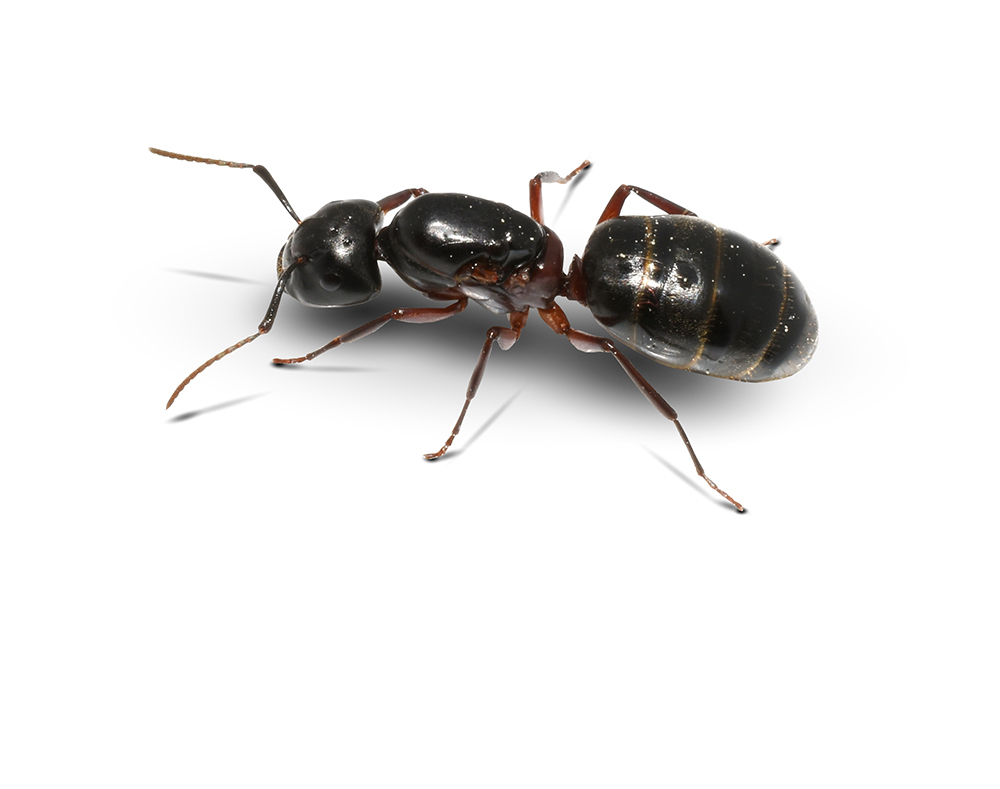
Carpenter ant
Pavement ant
Pharaoh ant

Related Pests

Other pests we deal with that often turn up in the same places.

Types of Groundhog
Raccoon close-up

Subject: Groundhog

SEND A QUICK MESSAGE

ROUND-UP YOUR Groundhog PROBLEM.

We’re Standing-by to Help
18000
Satisfied clients
12
Awards in 2018, 2019, 2020
50
Years of combined experience
1000000+
Pests exterminated or relocated
AWARD-WINNING SUPPORT
Need Assistance?

Our friendly and knowledgeable team will be happy to help! Contact us to speak to a representative.

SECURED PAYMENT
Safe & easy

Every transaction is completely secure. We take your privacy seriously.

QUICK TURN-AROUND
We take fast action

Pest problems wait for no one. That’s why you won’t have to wait long for us to take care of them.

GO! PEST PROTECTION
Coverage with responsibility

We are bonded and insured to give our clients the peace of mind they deserve.

ABOUT US

GO! Pest Control logo

A team of highly trained Pest Control & Extermination experts, covering the entire Toronto GTA and Ottawa’s NCR. We take infestations as seriously as we do the environment and safety of humans & protected wildlife.

X-twitter Pinterest Youtube Instagram Linkedin

PEST ARCHIVE

  • ANTS
  • BED BUGS
  • COCKROACHES
  • RODENTS
  • WILDLIFE
  • MORE PEST
  • ANTS
  • BED BUGS
  • COCKROACHES
  • RODENTS
  • WILDLIFE
  • MORE PEST
  • ANTS
  • BED BUGS
  • COCKROACHES
  • RODENTS
  • WILDLIFE
  • MORE PEST
  • ANTS
  • BED BUGS
  • COCKROACHES
  • RODENTS
  • WILDLIFE
  • MORE PEST

OUR SERVICES

  • RESIDENTIAL PEST CONTROL
  • COMMERCIAL PEST CONTROL
  • PEST & WILDLIFE CONTROL
  • INSECT EXTERMINATION
  • BIRD CONTROL
  • RESIDENTIAL PEST CONTROL
  • COMMERCIAL PEST CONTROL
  • PEST & WILDLIFE CONTROL
  • INSECT EXTERMINATION
  • BIRD CONTROL
  • RESIDENTIAL PEST CONTROL
  • COMMERCIAL PEST CONTROL
  • PEST & WILDLIFE CONTROL
  • INSECT EXTERMINATION
  • BIRD CONTROL
  • RESIDENTIAL PEST CONTROL
  • COMMERCIAL PEST CONTROL
  • PEST & WILDLIFE CONTROL
  • INSECT EXTERMINATION
  • BIRD CONTROL

AREAS WE SERVE

  • OTTAWA (NCR)
  • TORONTO (GTA)
  • OTTAWA (NCR)
  • TORONTO (GTA)
  • OTTAWA (NCR)
  • TORONTO (GTA)
  • OTTAWA (NCR)
  • TORONTO (GTA)

GO! PEST CONTROL

  • About
  • Contact
  • Careers
  • Blog
  • Testimonials
  • About
  • Contact
  • Careers
  • Blog
  • Testimonials
  • About
  • Contact
  • Careers
  • Blog
  • Testimonials
  • About
  • Contact
  • Careers
  • Blog
  • Testimonials
  • Privacy Policy
  • Terms
  • Site Map
  • 866-806-9227
  • Privacy Policy
  • Terms
  • Site Map
  • 866-806-9227
  • Privacy Policy
  • Terms
  • Site Map
  • 866-806-9227
  • Privacy Policy
  • Terms
  • Site Map
  • 866-806-9227

© 2026 GO! Pest Control, Inc. All rights reserved.