
Carpenter bees are large, around 20 mm long, and at a glance they pass for bumble bees. The giveaway is the abdomen. On a carpenter bee the top of the abdomen is bare, shiny and black, almost like polished plastic, while a bumble bee is furred all over. The thorax is still hairy and usually yellow. Males have a pale or yellow patch on the face, hover in one spot and will fly straight at anything that comes near, but males have no sting at all. Females are darker faced, can sting, and rarely do. Flight is loud and direct, and you often see a single bee patrolling the same stretch of deck rail or fascia all afternoon. Unlike bumble bees and honey bees, carpenter bees are solitary rather than social, so each female works her own gallery.
The woodpecker damage is often more costly than what the bees did on their own.
Carpenter bees want bare, weathered, untreated softwood, and they want it in the sun. Cedar, pine, fir and spruce are all favoured. That points them straight at the features people build onto Ontario homes: decks and deck rails, pergolas, gazebos, arbours, fence caps, play structures, wooden swing sets, shed trim, soffit, fascia and window frames. South and west facing surfaces get worked first because they are warm through the afternoon. Properties in older Toronto GTA neighbourhoods, Ottawa suburbs with mature cedar decks and Hamilton homes with wood trim all see them. The key point is history. Females often return to the wood where they emerged, and they expand old galleries instead of starting from scratch, so the same rail or fascia board gets tunnelled deeper year after year until the damage becomes structural.
As a health risk, carpenter bees are minor. The male that flies in your face has no sting. The female has one and can use it repeatedly, but she is docile and will only sting if handled or trapped. Anyone with a sting allergy still needs to take it seriously, and a gallery over a doorway or a seating area is worth dealing with for that reason. The property risk is a different matter, and this is where carpenter bees differ sharply from honey bees and bumble bees. They excavate tunnels into sound structural wood, typically boring in across the grain and then turning to run 15 cm or more with the grain. Galleries are reused and extended each season, branching into networks that weaken rails, joists and trim. Moisture follows the tunnels, rot sets in, and woodpeckers open the wood further chasing larvae.
Sealing and painting old holes matters most, because returning females look for existing galleries first.
We are licensed, insured and bonded, and we work in homes, apartments, condos and businesses across the Toronto GTA, Ottawa and Hamilton.
Yes. Honey bees and bumble bees are pollinators we prefer to relocate or leave alone. Carpenter bees bore into structural wood and cause damage that gets worse every year, so treatment is appropriate for them.
No. They chew it out to build nesting tunnels and discard the shavings, which is why you see sawdust below the hole. The damage comes from the size and reuse of the galleries, not from feeding.
It is unlikely. The bee hovering aggressively near you is almost certainly a male, and males cannot sting. Females can, but they avoid people unless grabbed or trapped.
Not while bees are still inside. Sealing a live gallery traps adults and larvae, and they often chew out a new exit. Treat first, then fill and paint once the gallery is inactive.
It is after the larvae in the galleries. Woodpecker work usually means carpenter bee activity has been going on for a while, and that ragged damage often costs more to repair than the original holes.
Click the ant type to learn what to look for and why the right treatment plan matters.
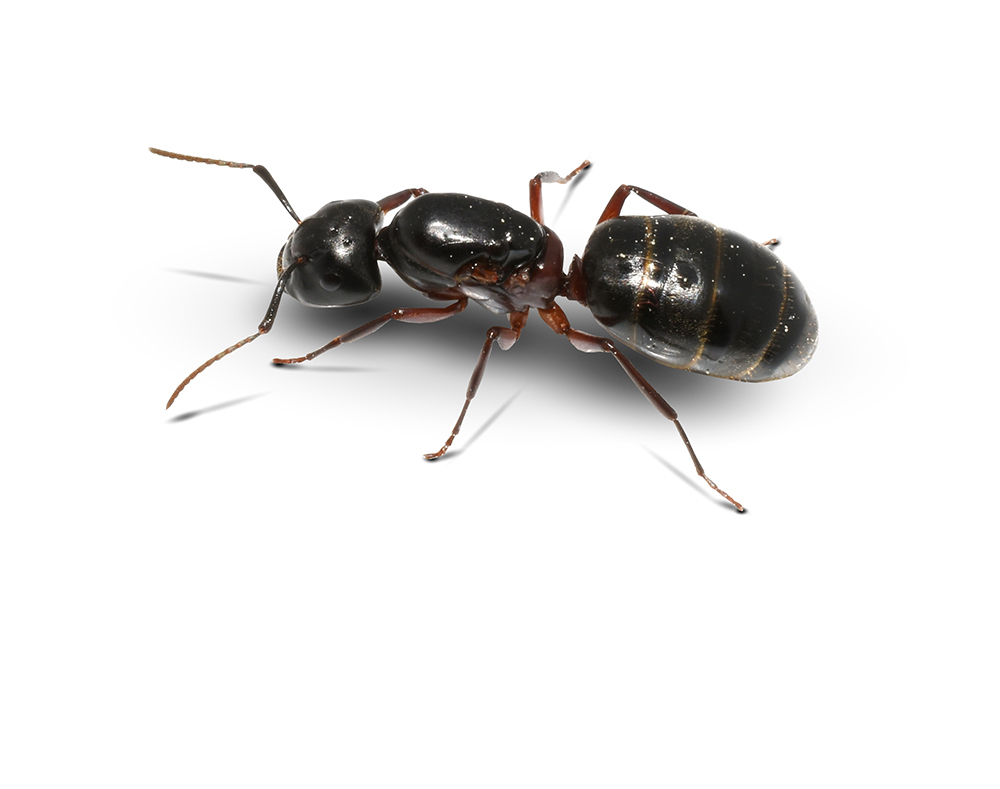
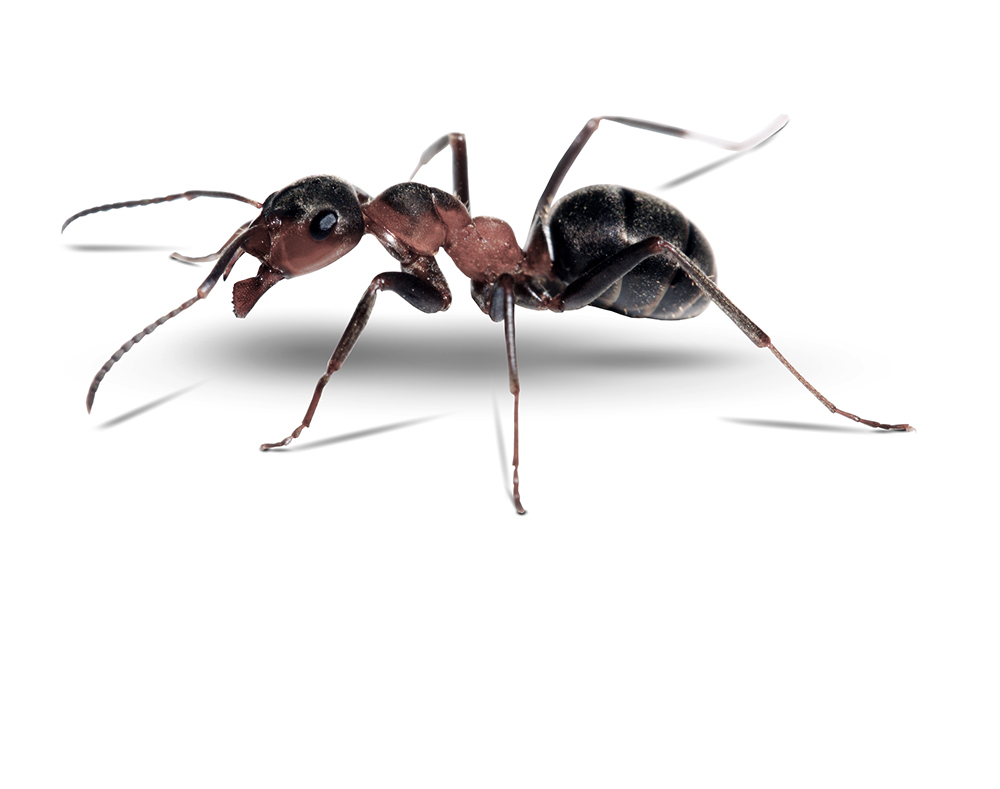

Other pests we deal with that often turn up in the same places.
Our friendly and knowledgeable team will be happy to help! Contact us to speak to a representative.
Every transaction is completely secure. We take your privacy seriously.
Pest problems wait for no one. That’s why you won’t have to wait long for us to take care of them.
We are bonded and insured to give our clients the peace of mind they deserve.
