
Carpenter ants are the largest ants found in Ontario homes. Workers range from about 0.76 to 2.54 cm, and a single colony produces workers of noticeably different sizes, which is a useful identifier on its own. Most are black, though some are reddish brown or a mix of red and black. The body has a smooth, evenly rounded thorax when viewed from the side, a single node at the waist, and elbowed antennae. Winged reproductives appear in spring and early summer and are often mistaken for termites, but an ant has a pinched waist, bent antennae and front wings longer than the back wings. Carpenter ants are mostly active at night, so a few large ants crossing a kitchen floor after dark tells you more than daytime sightings do.
Frass with a moisture problem nearby is the combination worth acting on quickly.
Moisture is the underlying cause, every time. Carpenter ants prefer wood that is damp, softened or already decaying, because it is easier to excavate. Ontario weather supplies plenty of opportunity: freeze and thaw cycles, ice damming on Ottawa rooftops, heavy spring rain across the Toronto GTA, and humid summers around Hamilton harbour. The specific problem spots are predictable. Leaking roof flashing and valleys, blocked gutters and downspouts discharging at the foundation, poorly sealed window and door frames, bathroom and kitchen leaks, damp basements and crawl spaces, sill plates behind failed caulking, and deck ledger boards holding water. Outside, the colony often starts in a stump, a dead tree limb, a woodpile against the wall or landscape timbers, then sends satellite nests indoors. Overhanging branches and stacked firewood give them a bridge straight to the building.
The health risk is low. Carpenter ants do not transmit disease and they do not sting in the way a wasp does, though a large worker can deliver a sharp pinch with its jaws and may spray formic acid into the bite, which stings briefly. They can walk across food surfaces, so basic kitchen hygiene still applies. The property risk is the real issue. Carpenter ants excavate wood to nest in it. They do not eat it, which is an important distinction, and they push the chewed material out as frass rather than digesting it. Over years, a mature colony with satellite nests can hollow out sill plates, joists, studs, window frames and deck structure, and the galleries follow exactly the wood that is already damp and weak. The damage is slow but it compounds, and it is frequently found only when a renovation opens a wall.
Treat the damp wood as the real problem and the ants have far less to work with.
We are licensed, insured and bonded, and we work in homes, apartments, condos and businesses across the Toronto GTA, Ottawa and Hamilton.
No. They excavate it to make nesting galleries and push the shavings out as frass. Termites eat wood, carpenter ants tunnel through it, and that is why you find piles of material below the damage.
Not necessarily, but it is worth checking. Large black ants indoors during winter, or frass anywhere, usually means a nest inside the structure rather than a foraging ant from the garden.
Slowly compared with termites, but it adds up. A colony takes years to mature, and the galleries follow damp wood, so the damage often appears where a leak has been quietly working on the timber for a long time.
It usually kills the ants you can see and leaves the nest untouched. Some products also cause a colony to split and scatter, which makes the problem harder to solve.
Almost always because the moisture is still there. If a leak, a blocked gutter or a damp crawl space is left as it is, damp wood stays available and a new colony finds it.
Click the ant type to learn what to look for and why the right treatment plan matters.
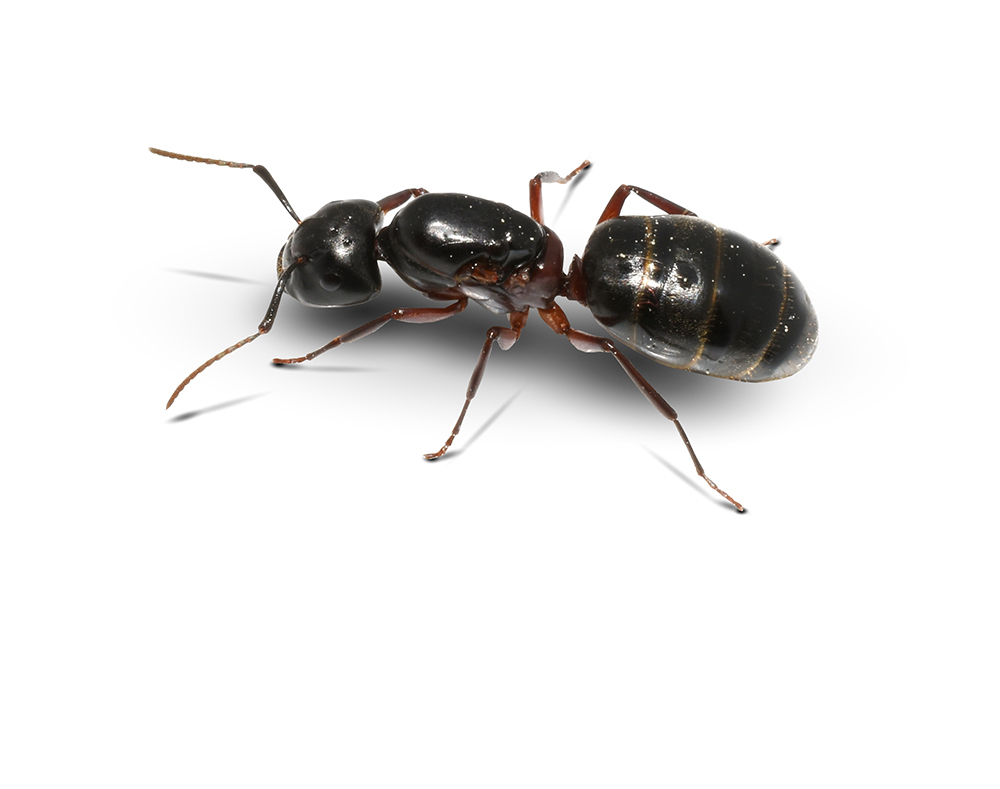
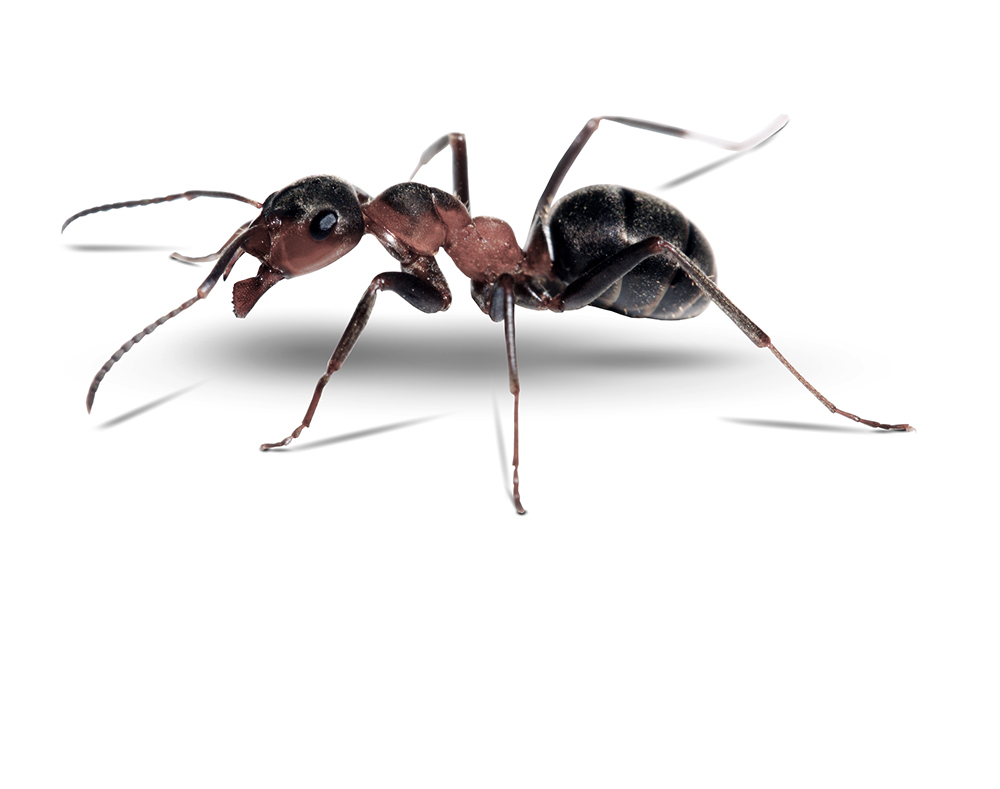
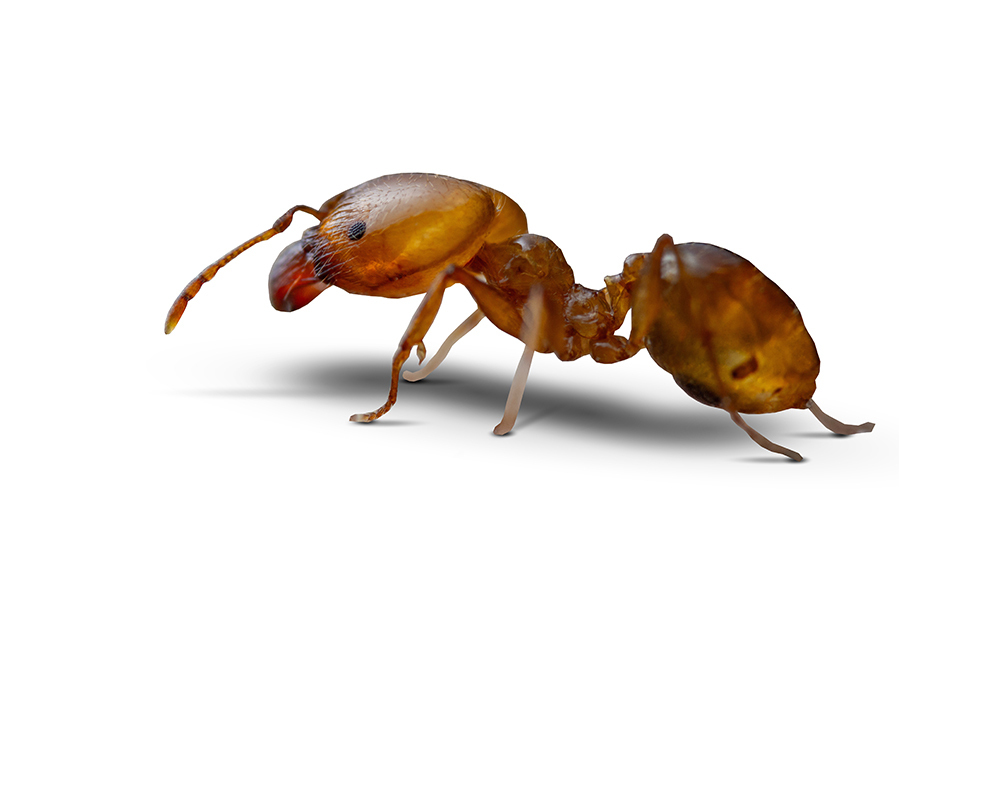
Other pests we deal with that often turn up in the same places.
Our friendly and knowledgeable team will be happy to help! Contact us to speak to a representative.
Every transaction is completely secure. We take your privacy seriously.
Pest problems wait for no one. That’s why you won’t have to wait long for us to take care of them.
We are bonded and insured to give our clients the peace of mind they deserve.
